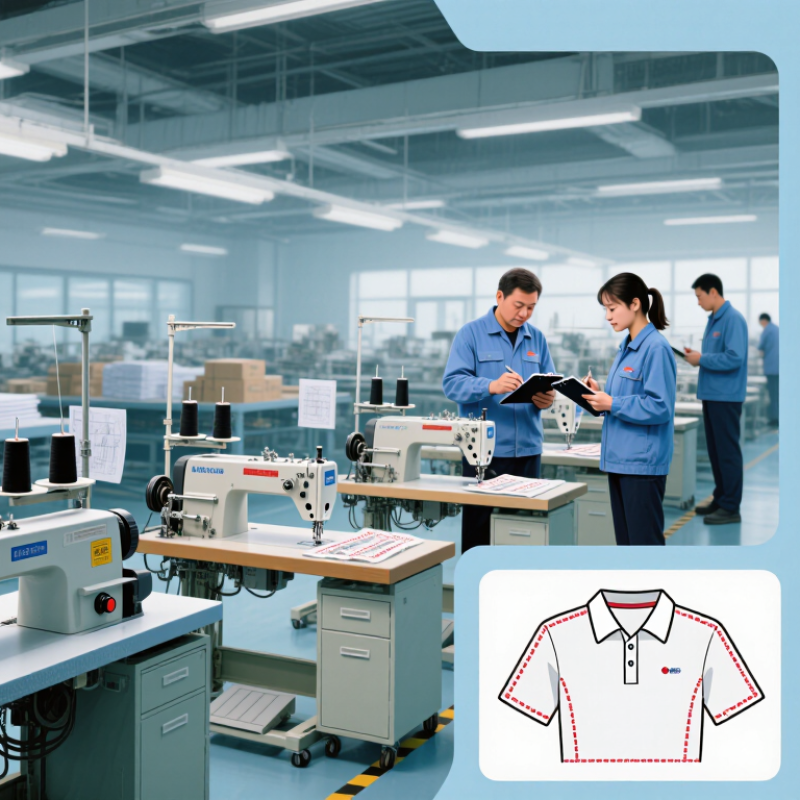
China Top Flat Lock Manufacturers for Global Buyers

China has become a major sourcing base for Flat Lock machines used in sportswear, underwear, knitwear, and technical garments. Its manufacturers offer varied machine gauges, stitch configurations, automation levels, and pricing structures. Yet a polished factory website proves little by itself. Buyers should examine production records, machine testing, component quality, and after-sales support.

Peter D. Scott, an industrial sewing-machine consultant, once stated, “A fast machine is valuable only when its seam remains stable.” That principle matters on the factory floor. A reliable Flat Lock machine should maintain even stitch density across stretchy fabric. Its differential feed should prevent unwanted ripples. Operators should also test skipped stitches, thread breakage, needle heating, and fabric distortion during extended runs.

The strongest Chinese manufacturers usually provide sample sewing, technical drawings, spare-part lists, and remote troubleshooting. Some can arrange factory inspections or third-party quality checks. Others offer impressive specifications but limited support after shipment. That difference can become expensive. A low purchase price may hide training costs, delayed parts, or inconsistent calibration.

Global buyers should compare more than the machine quotation. Check motor efficiency, warranty coverage, replacement-part availability, export experience, and response times. Ask for videos showing the machine sewing your actual fabric. Request written tolerances, not vague promises. No supplier fits every production line. This guide examines China’s top Flat Lock manufacturers through practical performance, engineering capability, production consistency, and buyer protection. The evaluation is not perfect; supplier data can change, and independent verification remains essential. Still, careful evidence can turn a risky purchase into a dependable manufacturing decision.

China Top Flat Lock Manufacturers for Global Buyers

What Are Flat Lock Machines and Why Do Global Buyers Need Them?

Flat lock machines create smooth, flexible seams by joining fabric layers with multiple threads. Their stitches can sit nearly level with the material, reducing rubbing against the skin. The seam looks simple. The mechanism is not.

In factory evaluations, buyers often use these machines for sportswear, underwear, base layers, and stretch garments. A stable flat seam improves comfort and helps prevent seam failure during repeated movement. It also supports cleaner production when operators need consistent stitch width and thread tension. Global buyers may need them because local markets increasingly expect durable, comfortable, and professionally finished clothing. However, machine selection is rarely perfect. A model suited to lightweight knitwear may struggle with heavier fabrics. I have seen buyers focus on speed and overlook feeding control, maintenance access, or operator training.

Tips: Check the needle configuration, seam width, differential feed, voltage, and compatible thread before ordering. Request sample sewing with your actual fabric. Review spare-part availability, technical manuals, warranty terms, and remote support. A supplier with clear testing records and responsive communication is usually safer than one offering only a low price. Consider noise, workspace size, and daily output too. Small details matter.

China Top Flat Lock Manufacturers for Global Buyers

What Are Flat Lock Machines and Why Do Global Buyers Need Them?

Flat lock machines create flat, flexible seams with minimal bulk, making them widely used for sportswear, underwear, swimwear, T-shirts, leggings, and other stretch garments. The chart below shows indicative maximum sewing-speed ranges commonly specified for different flat lock configurations.

How to read the chart: Higher sewing speed can improve production capacity, while the correct needle and thread configuration determines seam appearance, elasticity, fabric compatibility, and finishing quality. Actual performance depends on material, stitch length, operator skill, lubrication, and machine setup.

Key Features and Applications of China-Made Flat Lock Machines

China-made flat lock machines are widely used for stretch garments, sportswear, underwear, and lightweight knit fabrics. Their main strength is a clean, flexible seam that tolerates repeated movement. A typical machine uses multiple needles and loopers to form a flat finish with controlled thread tension. This reduces bulk against the skin.

For global buyers, practical features matter more than appearance. Adjustable stitch length helps operators handle different fabric weights. Differential feed can reduce waviness on elastic materials. Some models include automatic lubrication, guarded needle areas, and clear thread paths. These details support safer, steadier production. In daily use, a strong worktable and low vibration also improve operator comfort during long shifts.

Application testing should happen before purchase. Send actual fabric samples, including rib knit, cotton jersey, or performance blends. Check seam strength, skipped stitches, thread consumption, and feeding stability. A machine may perform well on a showroom sample but struggle with slippery fabric. That happens. Buyers should also review spare-part availability, training documents, electrical compatibility, and service response time. A lower initial price can become expensive when adjustments are frequent. Experienced technicians usually inspect needle timing, presser-foot pressure, and lubrication before full production. Small errors matter. Machines should be evaluated through repeatable tests, not promises alone.

How to Evaluate China’s Top Flat Lock Machine Manufacturers

Evaluating China’s top flat lock machine manufacturers requires more than comparing online prices. A serious buyer should inspect production capacity, engineering records, and quality controls. Ask for a factory video, but do not treat polished footage as proof. Request a live demonstration using your fabric, thread, seam width, and target speed. Watch the needle area closely. Vibration, uneven feeding, or skipped stitches may appear after continuous operation. Small details matter.

Review the machine’s technical sheet against your actual production plan. Check motor power, lubrication design, compatible gauges, spare-part availability, and operator access. Experienced manufacturers explain limitations clearly instead of promising every result. Ask for test reports, sample seams, and a written inspection standard. Verify whether critical components are measured and recorded before assembly. Independent inspection can reveal loose fasteners, poor finishing, or inconsistent wiring. It costs more upfront. It may prevent expensive downtime.

Reliability also depends on support after shipment. Confirm response times, remote troubleshooting methods, training materials, and warranty terms in writing. Speak with several recent overseas customers, preferably those using similar fabrics and volumes. Their feedback often exposes delays hidden during sales discussions. I would also compare packaging quality and loading procedures; a well-built machine can still arrive damaged. No evaluation is perfect. Leave room for doubt, document every assumption, and judge evidence rather than confidence.

Quality Standards, Customization, and Production Capabilities

China’s top flat lock manufacturers serve global buyers through controlled quality, flexible customization, and scalable production. Reliable factories inspect fabric feeding, needle movement, thread tension, and stitch density. These checks should occur during assembly, not only before shipment. A stable flat lock machine should run continuously without uneven seams or excessive vibration.

Experienced buyers should request production samples using their actual fabrics and thread types. Factory technicians can adjust stitch length, presser-foot pressure, motor speed, and seam width. Custom colors, machine configurations, voltage requirements, and packaging may also be available. Small details matter. A machine that performs well on cotton may struggle with elastic or layered sportswear materials. Clear technical drawings reduce misunderstandings between the factory and buyer.

Production capability requires more than a large workshop. Look for documented incoming inspections, traceable components, calibrated testing tools, and final performance records. International buyers may also request quality-management certificates and independent pre-shipment inspections. However, certificates alone cannot prove daily consistency. Factory visits, video audits, and repeated sample testing provide stronger evidence. No manufacturer is flawless, and even a capable supplier may miss a detail during a busy season. Buyers should examine corrective-action records and ask how defects are handled. Lead times, spare-parts availability, technician support, and export packing deserve equal attention. A dependable supplier explains limitations clearly instead of promising everything.

China Top Flat Lock Manufacturers for Global Buyers - Quality Standards, Customization, and Production Capabilities

Evaluation Dimension Typical Industry Requirement Quality Standard or Reference Customization Capability Production Capability to Verify Recommended Buyer Evidence
Material Selection Common materials include zinc alloy, stainless steel, carbon steel, aluminium alloy, and engineering plastics, depending on load, corrosion exposure, and installation environment. Material certificates should identify the grade, applicable standard, heat or batch number, and supplier traceability. Material grade, surface hardness, corrosion-resistant alloy, plating system, and non-metallic components can generally be specified in the purchase agreement. Separate material storage, incoming inspection, and batch traceability from raw material to finished goods. Request mill certificates, material declarations, incoming-inspection records, and representative samples from the intended production batch.
Dimensional Accuracy Critical dimensions should be controlled against an approved engineering drawing, including body width, mounting-hole position, locking travel, and mating-part clearance. ISO 2768 may be used for general tolerances when the drawing does not specify individual tolerances. Critical functional dimensions should have dedicated tolerances. Custom body dimensions, mounting patterns, latch geometry, thread specifications, and installation clearances can be developed from 2D or 3D drawings. Coordinate measuring machines, gauges, calipers, go/no-go fixtures, and documented first-article inspection procedures. Review a first-article inspection report containing actual measurements, nominal values, tolerances, and gauge calibration status.
Locking Performance The lock should maintain secure engagement under the buyer-defined static load, vibration, repeated operation, and installation conditions. There is no single universal standard covering every flat lock application. The load, safety factor, operating cycle, and test method should be written into the technical specification. Locking force, handle style, spring rate, catch shape, operating angle, and secondary retention features may be customized. Dedicated fixtures for tensile, shear, pull-out, vibration, and repeated-operation testing, with recorded failure modes. Request a product-specific test protocol, load-versus-displacement data, cycle results, and sample test photographs or videos.
Cycle Life The required service life depends on the application. Low-use access panels, industrial enclosures, transport equipment, and frequently operated doors require different cycle targets. The test quantity and acceptance criteria should be agreed before production because cycle-life requirements are application-specific. Wear-resistant bushings, hardened contact surfaces, replaceable springs, reinforced pivots, and low-friction washers can be incorporated where appropriate. Automated endurance rigs capable of recording cycle count, operating force, locking reliability, and post-test wear. Ask for a cycle-life report identifying sample quantity, test speed, load condition, lubrication condition, and acceptance criteria.
Corrosion Protection Protection may include electroless nickel, zinc plating, stainless-steel construction, powder coating, anodizing, or other finishes selected for the environment. ISO 9227 is commonly referenced for neutral salt spray testing, but salt-spray hours should not be treated as a direct prediction of outdoor service life. Finish type, coating thickness, colour, gloss level, masking areas, and corrosion-test duration can be defined in the specification. Coating-thickness measurement, adhesion testing, appearance inspection, and controlled salt-spray or cyclic-corrosion testing when required. Request coating specifications, thickness records, adhesion results, salt-spray conditions, and photos of tested parts.
Surface Finish Surface requirements should cover visible defects, burrs, sharp edges, scratches, pits, colour variation, and coating uniformity. A signed golden sample, approved limit samples, or a documented visual-inspection standard provides clearer acceptance criteria than general descriptions. Brushed, polished, satin, matte, plated, painted, anodized, or textured finishes may be specified subject to material and process feasibility. Deburring, polishing, cleaning, coating, and final visual-inspection stations with defined lighting and inspection distance. Approve a boundary sample and require inspection records for appearance, colour, gloss, burrs, and visible surface damage.
Manufacturing Processes Typical processes include stamping, CNC machining, die casting, injection moulding, bending, riveting, welding, assembly, and finishing. Process selection should be matched to material, annual volume, dimensional complexity, tooling investment, and required repeatability. Tooling, jigs, fixtures, assembly sequence, packaging method, and process parameters can be developed for a project-specific design. In-house process control or qualified process partners, preventive-maintenance records, tooling control, and documented work instructions. Request a process-flow chart, control plan, tooling schedule, production samples, and evidence of process-capability monitoring for critical dimensions.
Quality Management A controlled quality system should cover incoming materials, in-process checks, final inspection, nonconforming product, corrective action, and traceability. ISO 9001 certification can provide evidence of a quality-management system, but it does not replace product-specific inspection and performance testing. Inspection plans, control points, sampling levels, acceptance criteria, and corrective-action procedures can be aligned with the buyer’s quality agreement. Quality personnel independent from production, calibrated inspection equipment, documented nonconformance handling, and retained inspection records. Verify certificate scope and validity, audit the production site, review recent corrective-action records, and conduct pre-shipment inspection.
Prototype and Tooling Support A qualified supplier should be able to convert drawings or samples into prototypes before committing to production tooling. Engineering changes should be controlled through revision numbers, approval records, and documented change notifications. Rapid prototypes, soft tooling, production tooling, design-for-manufacturing feedback, and sample approval can be included in the development plan. Engineering review, 3D modelling, tool design, trial production, measurement reports, and formal sample sign-off. Request a development timeline covering drawing review, tooling, first samples, corrections, validation, and production release.
Supply and Production Capacity Capacity should be evaluated against the buyer’s actual annual demand, order frequency, peak-season requirements, and required lead time. Capacity claims should be supported by equipment lists, shift patterns, production records, and realistic utilisation assumptions. Forecast-based production, blanket orders, scheduled releases, safety stock, mixed models, and packaging configurations may be negotiated. Available machine hours, assembly stations, backup equipment, subcontractor controls, raw-material planning, and contingency arrangements. Request a capacity statement, typical lead-time schedule, on-time-delivery data, and a production plan for the proposed order volume.
Packaging and Export Readiness Packaging should prevent corrosion, abrasion, deformation, mixing of components, and damage during handling and international transport. Packaging and marking should comply with the buyer’s destination-market requirements and agreed shipping documents. Individual bags, trays, cartons, pallets, barcodes, multilingual labels, lot codes, and customer-specific packing quantities can be specified. Export packing procedures, carton-drop or transport simulation when required, moisture protection, and shipment-lot identification. Approve packaging drawings or samples and verify carton dimensions, gross weight, labels, quantity reconciliation, and export documentation.
Commercial Verification The total purchasing cost should include tooling, samples, unit price, inspection, packaging, freight terms, replacement policy, and possible engineering changes. Commercial terms should clearly identify Incoterms, payment milestones, warranty scope, inspection rights, and ownership of custom tooling. Non-recurring engineering charges, tooling amortisation, minimum order quantity, and volume-based pricing can be negotiated contractually. Stable quotation validity, documented change-control procedures, purchasing records, and an accountable customer-service contact. Compare itemised quotations and ensure that technical specifications, approved samples, drawings, inspection standards, and delivery terms are contractually attached.
Buyer Due-Diligence Priority The strongest supplier evaluation combines technical documentation, sample validation, factory capability, process controls, and shipment inspection. Certificates are useful supporting evidence; they should be checked for authenticity, scope, validity, and relevance to the supplied product. Customisation should be approved through controlled drawings, samples, specifications, and signed engineering-change records. A production-ready supplier should demonstrate repeatable processes rather than relying only on prototype quality or catalogue specifications. Recommended sequence: technical review → prototype approval → first-article inspection → process audit → pre-shipment inspection → performance feedback.

How Global Buyers Can Compare Suppliers and Place Orders

Global buyers comparing China’s top flat lock manufacturers should begin with the machine, not the brochure. Ask for stitch type, needle gauge, motor power, maximum speed, and fabric range. A supplier should provide a clear specification sheet and a video of the machine sewing comparable material. Test denim, jersey, or lightweight knit samples when relevant. A polished showroom can hide inconsistent feeding. Sample results matter more.

Check manufacturing capability through factory photos, production records, quality procedures, and export experience. Request references for similar orders, but verify dates and product models. Ask for test reports and applicable safety documentation. Compare more than unit price. Include tooling, spare parts, packaging, inspection, warranty response, and delivery terms in one cost table. Confirm whether quoted prices use FOB, CIF, or another agreed term. Small wording differences can change the final budget.

Before ordering, approve a written purchase specification with drawings, voltage, accessories, labels, and acceptable tolerances. Start with a controlled sample order if the supplier is new to you. Agree on payment stages, pre-shipment inspection, and remedies for missing parts. Keep every revision in the contract. I once underestimated spare-part needs; production delays followed. That mistake was avoidable. Buyers should also allow time for seasonal factory congestion and port changes. A supplier who answers difficult questions plainly is often safer than one promising everything.

Article Source:

Get a Quote
910-483-7828