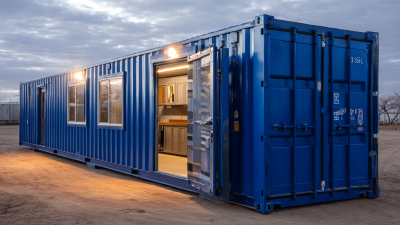
One trip containers are steel shipping units used for a single international journey before entering the resale market. They usually carry goods from a manufacturing region to a buyer’s country. After unloading, they become available for storage, transport, workshops, or site offices. The name sounds simple. The details matter.
Buyers often choose one trip containers because their condition is generally more predictable than older used units. Fresh paint, clean flooring, intact door seals, and limited corrosion can reduce preparation work. A contractor may need a dry storage room quickly. A small business may prefer a container with fewer dents and repairs. These practical advantages can support a better long-term value, especially when delivery and modification costs are carefully compared.
However, “one trip” does not mean flawless. A container may experience salt air, rough handling, or minor surface damage during its first voyage. A clean exterior can mislead. Experienced buyers check the CSC safety plate, container number, manufacture date, dimensions, and door operation. They also request current photographs, inspection records, and confirmation of wind and watertight condition. Local standards and intended use should guide the final decision.
The choice is not merely about appearance. It involves condition, documentation, logistics, and future maintenance. In my view, one trip containers can be a sensible option, but only when sellers provide clear evidence and buyers inspect the details. That step is easy to skip. It should not be.
One-trip containers are newly manufactured units used for a single initial shipment. They are produced in one country, loaded with cargo, and transported to another location. After unloading, the container enters the secondary market instead of returning empty. This route gives buyers access to near-new equipment without paying the full cost of unused inventory.
The demand is understandable. UNCTAD’s Review of Maritime Transport 2024 states that more than 80% of global merchandise trade by volume moves by sea. Every shipment depends on standardized equipment, especially for international cargo flows. A one-trip container usually has cleaner panels, tighter door seals, and less floor wear than older units. Buyers often select them for storage, site offices, workshops, or modified structures. The condition is visible.
However, “one trip” is a commercial description, not a perfect quality certificate. The unit may face rough handling, salt air, crane impacts, or brief outdoor exposure during its first voyage. Buyers should check the manufacturing date, ISO markings, CSC plate, door operation, roof condition, floor integrity, and signs of corrosion. The Container Shipping Industry Overview published by Drewry has repeatedly highlighted equipment availability and repositioning as important cost factors. That makes local inspection valuable, even for new-looking units.
Some sellers also use the term too loosely. That deserves scrutiny. A detailed inspection report, clear photographs, and verified dimensions can reduce misunderstandings. Small defects may still appear, and delivery conditions can change the final assessment. Reliability comes from evidence, not the label alone.

One-trip containers are usually new or near-new units used for a limited shipping journey. Buyers often choose them for cleaner floors, sharper corner posts, and fewer repairs. However, “one trip” is a trade description, not a universal quality guarantee. Inspect the door seals, locking bars, roof, welds, and wooden floor before payment. A clean exterior can hide water damage.
ISO 668 defines the main external dimensions. A standard 20-foot container measures about 6.058 metres long and 2.438 metres wide. A 40-foot unit doubles the length to about 12.192 metres. Both are normally 2.591 metres high. The 40-foot high-cube version keeps the same length and width but rises to about 2.896 metres. Internal measurements and payloads vary by design. Allow space for forklift access, ventilation, and uneven cargo shapes. UNCTAD’s Review of Maritime Transport 2024 reported around 858 million TEU in global container-port throughput during 2023. That scale explains why standard dimensions remain commercially important.
Tips: Measure the delivery route, not just the container. Check bridge clearances, turning space, ground strength, and crane access. Request recent inspection photos, but do not rely on photos alone. ISO dimensions are useful, yet they do not promise perfect condition. I have seen buyers focus on volume and overlook door alignment. That mistake becomes expensive after placement. A practical inspection report should record dents, corrosion, floor moisture, and identification markings before the unit leaves the depot.
| Specification | 20ft Standard | 40ft Standard | 40ft High-Cube |
|---|---|---|---|
| Common ISO size designation | 1 TEU | 2 TEU | 2 TEU |
| Typical one-trip condition | New or nearly new; commonly used for one primary ocean voyage before resale | New or nearly new; commonly used for one primary ocean voyage before resale | New or nearly new; commonly used for one primary ocean voyage before resale |
| Nominal external length | 6,058 mm (19 ft 10 in) | 12,192 mm (40 ft) | 12,192 mm (40 ft) |
| Nominal external width | 2,438 mm (8 ft) | 2,438 mm (8 ft) | 2,438 mm (8 ft) |
| Nominal external height | 2,591 mm (8 ft 6 in) | 2,591 mm (8 ft 6 in) | 2,896 mm (9 ft 6 in) |
| Approximate internal length | 5,898 mm | 12,032 mm | 12,032 mm |
| Approximate internal width | 2,350 mm | 2,350 mm | 2,350 mm |
| Approximate internal height | 2,390 mm | 2,390 mm | 2,695 mm |
| Approximate internal volume | 33.1 m³ | 67.7 m³ | 76.4 m³ |
| Typical door opening width | Approximately 2,340 mm | Approximately 2,340 mm | Approximately 2,340 mm |
| Typical door opening height | Approximately 2,280 mm | Approximately 2,280 mm | Approximately 2,585 mm |
| Typical tare weight | Approximately 2,200–2,400 kg | Approximately 3,700–4,000 kg | Approximately 3,900–4,300 kg |
| Typical maximum gross mass | Up to approximately 30,480 kg | Up to approximately 30,480 kg | Up to approximately 30,480 kg |
| Indicative payload range | Approximately 28,000–28,300 kg | Approximately 26,500–26,800 kg | Approximately 26,200–26,600 kg |
| Main space advantage | Compact footprint and efficient handling for dense or heavy cargo | Nearly twice the floor length of a 20ft unit | Additional internal height and approximately 13% more volume than a 40ft standard unit |
| Typical buyer preference | Workshops, storage sites, smaller shipments, and cargo with a high weight-to-volume ratio | General cargo, palletized goods, furniture, machinery, and larger storage projects | Lightweight, bulky, tall, or high-volume cargo requiring extra cubic capacity |
| Why buyers choose a one-trip unit | Cleaner appearance, less corrosion and floor wear, fewer previous repairs, and a longer expected service life than many older used containers | ||
| Important purchasing checks | Confirm the actual tare weight, payload rating, door dimensions, floor condition, wind-and-watertight status, locking gear, CSC safety plate, delivery access, and local transport restrictions before purchase. | ||
| Data note | External dimensions follow the common ISO 668 nominal size categories. Internal dimensions, tare weight, payload, door openings, and volume are typical industry values and can vary by construction specification, steel thickness, flooring, fittings, and manufacturer. The actual rating plate and certification documents should control for a specific unit. | ||
One-trip containers are usually new units shipped once from a manufacturing country to a buyer’s market. The phrase describes service history, not a separate legal class. Buyers often choose them for cleaner interiors, tighter door seals, and fewer dents. A practical inspection still matters. New does not mean flawless.
Safety depends on documented compliance. The Convention for Safe Containers requires a valid CSC safety approval plate before international transport. The plate identifies the container, maximum gross mass, stacking load, and examination requirements. Periodic examination is generally required within 30 months, unless an approved continuous examination system applies. ISO 1496-1 governs structural performance for general-purpose freight containers. Its tests address lifting, stacking, floor strength, end walls, side walls, and roof loads. These forces are not theoretical. A loaded box may be lifted, stacked several units high, and exposed to repeated ship movement.
Industry data shows why careful verification remains necessary. The World Shipping Council reported 221 containers lost at sea in 2023, representing about 0.0002% of the roughly 113 million containers transported that year. The percentage is tiny, but one damaged corner post can create serious handling risk. Buyers should compare the CSC plate with inspection records, check welds and locking bars, and measure floor damage. Small defects matter. ISO testing reflects controlled conditions, while real cargo faces uneven loading, moisture, and rough handling. Standards reduce risk; they do not replace judgment.
“One-trip” describes a newly manufactured container with little or no prior transport service; it is not a separate CSC safety category. ISO 1496-1 defines structural performance tests, while the CSC Convention requires an approved safety plate and periodic examination.
The values show selected ISO 1496-1 test loads as multiples of R, the container’s maximum gross mass: stacking uses 1.8R, side-wall testing uses 0.6R, and end-wall testing uses 0.4R. Exact requirements depend on the container type and applicable standard edition. Under CSC rules, the first examination is generally required no later than five years after manufacture, followed by examinations at intervals of no more than 30 months.
A one-trip container usually travels once from its manufacturing location to an import market. Buyers often choose it for cleaner panels, tighter door seals, and fewer floor repairs. These details matter when cargo faces rain, dust, or repeated handling. However, “one trip” does not mean every unit is identical. Condition still requires inspection.
ISO 668 defines key container dimensions and ratings. A common 20-foot ISO unit has a maximum gross mass of 30,480 kg. This figure includes the container, cargo, packaging, and securing equipment. It does not represent cargo payload alone. With a typical tare weight near 2,300 kg, practical payload may approach 28,000 kg. The door plate remains the controlling reference.
UNCTAD’s Review of Maritime Transport 2023 recorded approximately 26.5 million TEU of global container ship capacity. That scale shows why standardized dimensions remain essential across ports, cranes, railways, and roads. Yet a perfect calculation can still fail. Local axle limits, uneven cargo distribution, or an outdated weight mark may reduce usable capacity.
Tips: Weigh the loaded unit before dispatch. Check the CSC safety plate, tare weight, corner posts, floor condition, and door gasket. Keep the center of gravity low. Do not assume a 30,480 kg rating overrides local transport rules. Experienced operators also photograph the empty container, because small defects become expensive disputes later.
One trip containers usually travel once from the manufacturing site to their first delivery point. They often show limited wear, clean paint, and dry interiors. However, “one trip” is not a substitute for inspection. I have seen nearly unused units with small door misalignments or rough floor edges. Those details matter.
Look closely at the floor. It should feel solid underfoot, without soft patches, deep splits, or exposed fasteners. Inspect both doors for straight frames, smooth hinges, and locking bars that close fully. The rubber seals should remain flexible and meet evenly around the opening. Ask for a practical water-tightness check when possible. Even a small gap can damage cargo during heavy rain. Confirm the serial number on the frame, doors, and documents. Buyers sometimes skip this step. That can create avoidable disputes. A careful selection may take longer, but it reduces repair costs and delivery surprises.