Top 10 EVA Machine Manufacturers Worldwide

Choosing an EVA Machine is not simply a matter of comparing prices or counting factory photographs. It requires careful attention to foam density, mold accuracy, cycle stability, energy use, and operator safety. These details shape everyday production, from a clean outsole edge to the uniform cushioning inside a sports shoe.

Professor Tim Osswald, a recognized plastics-processing specialist, once stated, “Processing determines whether a material’s potential becomes a useful product.” This principle fits EVA manufacturing closely. A capable machine must control temperature, pressure, timing, and material expansion with dependable precision. Small variations can create visible defects, uneven hardness, or wasted sheets and soles.

This guide examines the Top 10 EVA Machine Manufacturers Worldwide through a practical industry lens. It considers engineering experience, machine configurations, automation, maintenance support, testing standards, and customer feedback. The list is not an absolute verdict. Regional service quality can change the buying decision. A technically advanced machine may still disappoint if spare parts arrive slowly or training is limited.

Real production is rarely perfect.

Factories face changing materials, skilled-labor shortages, mold wear, and rising electricity costs. Therefore, the strongest manufacturer is not always the largest name. It is the supplier that understands a buyer’s process and provides measurable, repeatable solutions. Readers should verify specifications directly, request sample trials, inspect installed equipment, and compare long-term operating costs before investing. The ranking offers direction, but careful verification remains essential.
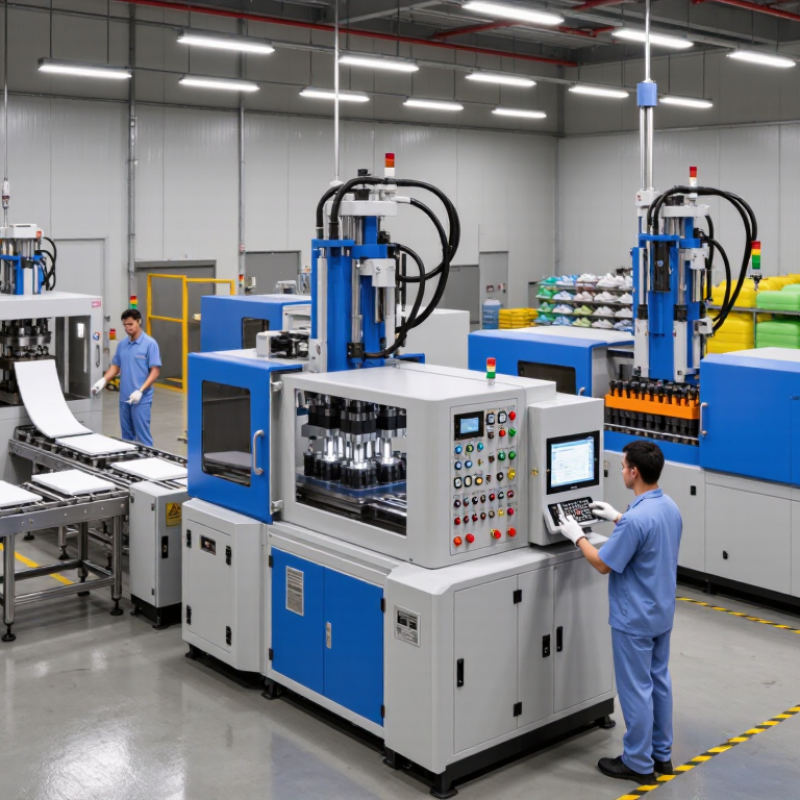
Top 10 EVA Machine Manufacturers Worldwide

EVA Machines: Definition, Functions, and Industrial Applications

EVA, or ethylene-vinyl acetate, is a flexible thermoplastic used in foam, film, footwear components, packaging, cable insulation, and solar encapsulation. EVA machines process this material through controlled heating, pressure, forming, cutting, or bonding. Their design depends on the product, compound hardness, vinyl acetate content, and required production volume.

Common equipment Common equipment includes injection molding machines, foam molding systems, extrusion lines, laminators, and precision die-cutting machines. A production line may heat EVA pellets above their softening range, inject the melt into a mold, and hold pressure until the part stabilizes. Temperature sensors, screw design, mold ventilation, and cooling speed directly affect density and surface quality. Small errors spread. Uneven heating can create bubbles, warping, or weak edges.

Production evaluation and application requirements In factory evaluations, operators often check cycle consistency before maximum output. A machine producing 40 parts per minute is not efficient if rejects increase after several hours. Energy consumption, cleaning access, spare-part availability, and software records also influence long-term reliability. For photovoltaic films, stable thickness and clean lamination are critical. For athletic soles, rebound, compression recovery, and dimensional accuracy matter more. Not every line needs the same automation level. A lower-speed system may suit custom production, while high-volume plants require automatic feeding and inline inspection. Some specifications still look impressive on paper, yet real material behavior can differ between batches. Careful trials remain necessary.


EVA Machine Types and Their Manufacturing Processes

EVA Machine Types and Their Manufacturing Processes

EVA machines differ because each process controls heat, pressure, and material flow differently. Injection molding suits small, detailed components. Pellets are melted, injected into a closed mold, cooled, and ejected. Compression molding uses preheated EVA sheets or pellets. Pressure shapes the material between heated plates. This method works well for thick soles, pads, and protective parts.

Extrusion lines produce continuous EVA profiles, films, and sheets. A screw melts the resin, then pushes it through a die. Cooling rollers determine thickness and surface finish. For solar encapsulant film, extrusion requires stable temperature control and low contamination. The International Energy Agency reported 456 gigawatts of new solar photovoltaic capacity in 2023. That growth increases demand for reliable EVA film equipment. Grand View Research also projects continued expansion in the global EVA market through 2030, although estimates vary between reports. The difference deserves attention.

Tips: Check melt uniformity, screw design, mold temperature, and cooling speed before comparing machine prices. A lower-cost line may consume more energy or create higher scrap rates. Pilot trials are essential. Real production conditions often expose defects that brochures miss. Operators should record cycle time, density, shrinkage, and rejected pieces. Small measurement gaps can become expensive process problems.

Criteria for Evaluating Global EVA Machine Manufacturers

Selecting the top 10 EVA machine manufacturers worldwide requires more than comparing catalog prices. Buyers should examine engineering experience, process knowledge, and verified production results. A reliable manufacturer explains how its machines handle temperature control, injection pressure, curing time, and material consistency. These details affect sole density, surface quality, and daily output.

Factory visits can reveal more than polished brochures. Check machine assembly, electrical testing, calibration records, and operator training. Ask for production references using similar EVA materials and product sizes. Independent certifications, transparent warranties, and responsive spare-parts support also indicate stronger reliability. Energy consumption deserves attention, especially when machines run through long shifts. A lower purchase price may hide higher maintenance costs. I have seen evaluations focus too heavily on speed. That can be a mistake.

Tips: Request a live trial with your own material. Measure temperature variation across the platen. Review cycle-time data, reject rates, and emergency service procedures. Ask who performs installation and how quickly technicians can respond. Compare total ownership cost, not only the initial quotation. Leave room for doubt. A confident sales presentation is not technical proof. During supplier audits, record small observations, such as cable labeling, oil leaks, noise levels, and cleanliness around control panels. These clues may expose future maintenance problems.

Top 10 EVA Machine Manufacturers Worldwide

Top 10 EVA Machine Manufacturers Worldwide

The top ten EVA machine manufacturers worldwide are usually judged by more than production volume. Experienced buyers examine foam density, sheet thickness, cycle stability, and energy use. A dependable manufacturer should provide clear technical drawings, material compatibility data, and factory testing records. Machines for EVA foam sheets, injection molding, extrusion, laminating, and precision cutting require different engineering skills. One supplier may excel at footwear components, while another performs better with protective packaging or industrial insulation.

Reliable manufacturers often support installation, operator training, spare parts, and process troubleshooting. Watch the details. A stable machine should maintain even heating across the platen, with temperature differences kept within practical limits. Hydraulic systems must respond smoothly during repeated cycles. Control panels should record pressure, temperature, alarm history, and production time. Certifications matter, but they cannot replace hands-on testing. Ask for sample production using your actual EVA formulation and target dimensions.

No ranking is perfect. Some manufacturers publish impressive specifications but offer weak after-sales support. That can become an expensive lesson. Buyers should compare verified customer references, delivery records, warranty terms, and maintenance response times. An honest evaluation also considers rejected products, power consumption, mold-change time, and operator safety. The best choice is rarely the cheapest machine. It is the system that delivers repeatable quality in your factory, with technical support that remains useful after installation.

Global Market Trends in EVA Machine Manufacturing

The global EVA machine market is changing with photovoltaic manufacturing demand. According to IEA PVPS Trends 2024, the world added about 456 GW of solar capacity in 2023. This expansion increases demand for laminators, vacuum systems, and automated encapsulation lines. EVA machines must now support larger modules, thinner materials, and higher production speed. Energy consumption is also receiving closer attention. A faster machine is not always a better machine.

Manufacturers increasingly invest in intelligent temperature control and real-time pressure monitoring. These features can reduce bubbles, wrinkles, and uneven curing during lamination. The International Energy Agency expects solar power to remain the largest source of new renewable capacity through 2030. This outlook supports continued equipment investment, especially in Asia, Europe, and North America. However, regional factory policies and supply-chain disruptions can change purchasing plans quickly. That assumption needs testing. Maintenance access, operator training, and spare-part availability often matter more than impressive specifications.

Tips: Compare cycle time with actual energy use, not brochure figures. Ask for data from similar module sizes and materials. Check whether sensors remain accurate after repeated high-temperature cycles. Buyers should also request factory acceptance tests and documented calibration records. A small trial run can reveal defects hidden in a polished demonstration. Industry reports provide direction, but production-floor evidence deserves greater weight.

Top 10 EVA Machine Manufacturers Worldwide - Global Market Trends in EVA Machine Manufacturing

Comparative overview of major EVA machinery manufacturing hubs and their commonly observed equipment capabilities

Rank Manufacturing Hub Core EVA Machine Categories Typical EVA Products and Applications Common Processing Temperature Typical Equipment Scale Key Market Trend Common Technical and Compliance Requirements
1 Mainland China EVA injection molding machines Foam molding systems Sheet and film extruders Footwear soles, sandals, sports goods, protective packaging, solar encapsulant film and flexible sheets Approximately 140–210°C, depending on grade and process Small production cells to high-volume automated lines; commonly specified by injection capacity, clamping force or extrusion output Strong demand for automation, servo-hydraulic systems, energy reduction and integrated molding lines for footwear and photovoltaic materials CE-related machinery safety requirements for export markets, electrical safety, emergency-stop systems, guarding and process-temperature control
2 Taiwan EVA injection molding machines Compression molding equipment Foam processing lines Athletic footwear, molded foam components, technical elastomer parts and lightweight consumer products Approximately 150–205°C for many EVA molding operations Medium- to large-volume footwear systems with multi-station automation and programmable process control Movement toward lower scrap rates, robotic handling, faster mold changes and production traceability Industrial electrical safety, guarding, hydraulic safety, programmable controller protection and export-market documentation
3 Italy Extrusion lines Calendering equipment Laminating and coating systems Flexible sheets, footwear components, multilayer films, coated textiles and specialty polymer products Typically 130–200°C, adjusted for melt flow and formulation Customized continuous lines with precision dosing, thickness control and downstream finishing equipment Demand for high-efficiency extrusion, recycled-content processing, digital monitoring and flexible product changeover European machinery safety, electromagnetic compatibility, electrical safety and guarding requirements; food-contact rules may apply to relevant films
4 Germany High-precision extruders Compounding systems Film and sheet lines Engineering compounds, photovoltaic encapsulant film, medical and technical films, wire and cable insulation Often 120–210°C, subject to EVA vinyl-acetate content and additives High-precision laboratory, pilot and industrial systems with gravimetric feeding and closed-loop controls Industry 4.0 connectivity, process-data collection, energy monitoring and stable processing of recycled or blended materials Machinery safety, electrical safety, EMC, quality management and application-specific requirements for photovoltaic, medical or food-contact products
5 Japan Precision injection molding Film extrusion Microcellular foam equipment Precision footwear components, electronic cushioning parts, technical films and specialty molded products Approximately 140–205°C in common EVA processing applications Compact precision machines through automated high-repeatability production cells Focus on repeatability, low-noise operation, compact footprints, predictive maintenance and reduced material waste Industrial safety, electrical conformity, guarding, temperature protection and customer-specific quality-control requirements
6 South Korea Film extrusion lines Lamination systems Injection molding equipment Solar encapsulant film, flexible packaging structures, footwear components and industrial films Typically 130–200°C, with tighter control for multilayer films Medium- and high-throughput continuous lines with automatic winding, thickness measurement and web control Photovoltaic-film capacity expansion, multilayer processing, inline inspection and energy-efficient drive systems Electrical and machinery safety, web-transport protection, film-quality inspection and photovoltaic product specifications where applicable
7 United States Custom extrusion systems Laboratory extruders Compounding and recycling lines Technical compounds, medical and laboratory films, wire and cable products, packaging and recycled polymer blends Approximately 120–210°C depending on formulation and residence time Laboratory, pilot and customized industrial systems with extensive instrumentation and process development capability Growth in sustainable materials, closed-loop recycling, process analytics and application-specific material development OSHA-oriented workplace safety, electrical safety, guarding, local installation codes and sector-specific requirements
8 India Footwear molding machines Sheet and film extruders Recycling and granulation systems Footwear soles, slippers, mats, flexible sheets, packaging products and recycled EVA compounds Commonly 140–205°C for molding and extrusion processes Cost-efficient small- and medium-scale systems, with growing availability of automated production lines Expansion of domestic footwear manufacturing, demand for affordable automation and increased attention to scrap recovery Electrical safety, machine guarding, pressure and hydraulic protection, emergency stops and applicable national or export requirements
9 Türkiye Shoe-sole molding equipment Injection systems Extrusion and recycling equipment EVA footwear soles, molded components, flexible profiles, sheets and recycled footwear materials Approximately 145–205°C depending on EVA grade and mold design Flexible small- and medium-batch machines serving footwear and polymer-conversion manufacturers Regional supply-chain development, export-oriented footwear production, automation and lower-energy hydraulic systems CE machinery safety for applicable markets, electrical conformity, guarding, pressure-system protection and operator safety
10 Spain Extrusion systems Coating and laminating lines Specialty compounding equipment Flexible films, technical laminates, coated materials, packaging structures and specialty EVA compounds Typically 130–200°C, depending on melt flow, additives and line speed Customized pilot and industrial lines emphasizing film quality, dosing accuracy and downstream automation Interest in recyclable structures, lightweight films, digital line control and improved energy efficiency European machinery safety, EMC, electrical safety, guarding and application-specific regulations for packaging or technical products

Temperature and capacity figures are representative operating ranges rather than manufacturer-specific specifications. Actual settings depend on EVA grade, vinyl-acetate content, additives, mold geometry, screw design, line speed and end-use requirements.

Article Source:

Get a Quote
910-483-7828