Why Is My Track Drive Motor Not Working?

When a Track Drive Motor stops working, the machine may remain strangely quiet while one sprocket refuses to move. This failure can halt an excavator, crawler carrier, or compact track loader within minutes. The cause is not always the motor itself. A weak battery, damaged wiring, contaminated hydraulic oil, blocked pilot pressure, or a worn final drive can create similar symptoms.

Industry scale makes accurate diagnosis important. KHL Group’s 2024 Yellow Table reported more than one million construction equipment units sold worldwide during 2023. Each machine adds another service history, operating environment, and maintenance pattern to the field. A motor working in muddy demolition debris faces different risks from one operating on clean quarry surfaces. Caterpillar, Komatsu, and other OEM service publications consistently stress pressure testing, oil inspection, and electrical verification before component replacement. Guesswork is expensive.

Start with the evidence. Check whether the machine travels in one direction or both. Listen for pump noise, inspect connectors near the travel control valve, and compare hydraulic pressure with the manufacturer’s specifications. Look for metallic particles in the final-drive oil. They may point to bearing or gear damage. A digital multimeter helps confirm voltage and continuity, but it cannot prove hydraulic flow. That distinction matters.

A quick visual check feels reassuring. It can still mislead.

This guide explains common Track Drive Motor failures, practical testing steps, and warning signs that require qualified service support. It also reflects ISO 14224’s reliability-data principle: consistent failure records improve maintenance decisions. Some diagnoses remain uncertain without OEM tools, pressure gauges, and operating-history data. That limitation should be acknowledged, not hidden.
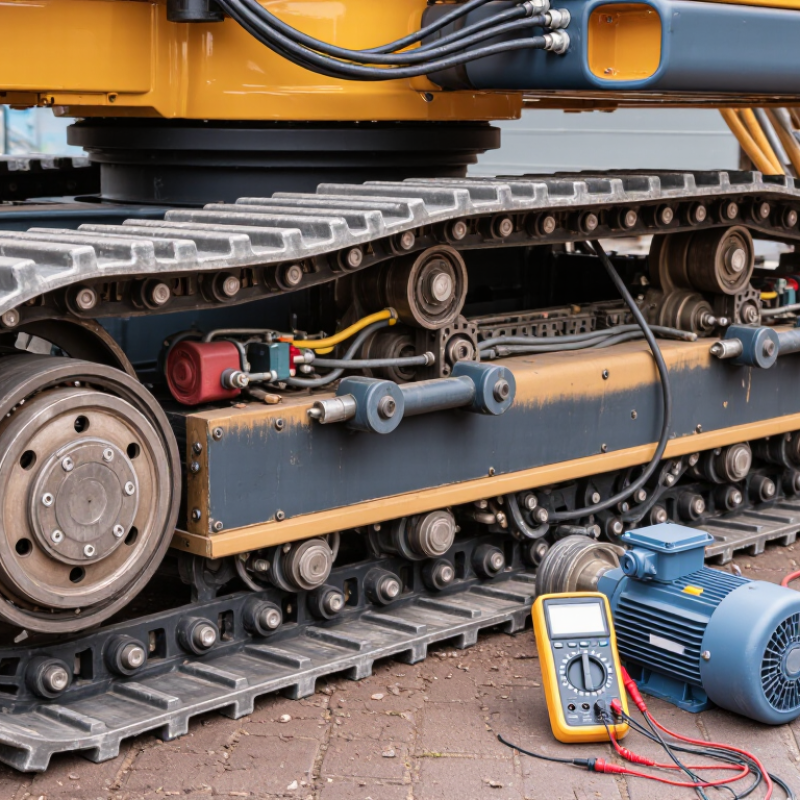
Why Is My Track Drive Motor Not Working?

What a Track Drive Motor Does and How It Powers the Machine

A track drive motor converts hydraulic pressure into controlled torque at the final drive. That torque turns the sprocket, pulls the track chain, and moves the machine across soil, gravel, or slopes. Most systems use a hydraulic pump, control valve, motor, planetary gears, and a case drain. One weak link can stop movement.

The U.S. Department of Energy’s Motor Systems Market Assessment reports that motor-driven systems use about 68% of industrial electricity. Hydraulic machines are different, but the lesson remains useful: efficiency depends on the complete system, not only the motor. A blocked filter, low hydraulic oil, damaged hose, or restricted case drain can reduce pressure. The machine may still sound normal. That misleads people.

Field technicians often check pilot pressure, track tension, and motor temperature before replacing parts. A hot housing deserves attention. Metal particles in the oil deserve more. ISO 4406 cleanliness testing can reveal contamination levels, although a laboratory result does not replace hands-on inspection. I have seen diagnosis stop too early at the motor. That habit needs reconsideration.

Tips: Compare both sides. If one track works, test pressure and flow on each side. Check electrical controls and travel valves, too. Never inspect a moving track. Follow the service manual and isolate stored hydraulic energy before testing.


Common Reasons a Track Drive Motor Stops Working

A track drive motor may stop working because power, pressure, or mechanical load has changed. Check the battery voltage, fuse, wiring plugs, and ground connection before removing hydraulic parts. A loose connector can leave the cab display active while the motor remains silent. It happens more often than many technicians expect.

Hydraulic contamination is another common cause. Dirty oil can restrict a control valve, damage a piston group, or make the motor move slowly before stopping completely. ISO 4406 cleanliness codes help technicians compare particle levels, but a sample must come from the correct test point.

Plant Engineering’s 2023 Maintenance Report found that 82% of facilities experienced unplanned downtime, showing how quickly small maintenance problems become production losses. The report is not track-motor specific, but its warning applies here.

Heat creates a second path to failure. A blocked cooler, low oil level, or overloaded track can raise case temperature and weaken seals. Let it cool. Then check the case drain flow, relief pressure, and travel brake release pressure against service specifications. A failed brake-release circuit may look like a dead motor, even when the motor itself is healthy.

Metal particles on a magnetic drain plug deserve attention. They may indicate internal wear, though I have seen harmless assembly debris misdiagnosed as catastrophic damage. Never replace the motor before confirming hydraulic flow and return pressure; that assumption can waste hours and expensive parts.

How to Diagnose Track Drive Motor Problems Step by Step

Why Is My Track Drive Motor Not Working?

How to Diagnose Track Drive Motor Problems Step by Step

When a track drive motor stops, do not replace it immediately. The fault may involve the control circuit, hydraulic supply, or final drive. Park the machine on firm ground, lower all attachments, shut down power, and release stored pressure. Wear eye protection and stay clear of moving tracks. Inspect hoses, wiring, connectors, and the area around the motor. Fresh oil, crushed wires, or loose fittings often reveal the first clue.

Check battery voltage, fuses, travel switches, and controller signals with a reliable meter. Then compare hydraulic pressure and flow with the service manual specifications. Do not guess. If pressure is low in both directions, inspect the pump, relief valve, and filters. If only one direction fails, examine the pilot line, control valve, and spool for blockage. A pressure test at idle can look normal, so test under the correct operating load.

Listen carefully during operation. Grinding may suggest bearing or gear damage, while silence may indicate no command or an internal seizure. One mistake is blaming the motor before confirming oil flow. I have seen simple connector faults lead to expensive repairs. Recheck every reading, because a loose test fitting can create a false diagnosis. If hydraulic pressure is excessive or the motor must be opened, use trained service personnel and the approved repair procedure.

Why Is My Track Drive Motor Not Working? - How to Diagnose Track Drive Motor Problems Step by Step

Step Inspection Area Common Symptom Diagnostic Check Normal Finding Recommended Action
1 Operator Controls The track does not respond to the travel control. Move the control through its full range and confirm that safety interlocks, travel levers, and lockout controls are released. Controls move freely and the machine displays no active travel lockout. Correct the control setting or investigate the interlock circuit before testing the motor.
2 Battery and Main Power No movement, warning lights, or weak electrical response. Measure battery voltage with the ignition off and inspect the battery terminals, disconnect switch, and main fuse. A fully charged 12-volt battery is approximately 12.6 volts at rest; a 24-volt system is approximately 25.2 volts. Charge or replace a weak battery and clean tight electrical connections. Use the machine service specification for exact limits.
3 Wiring and Connectors The motor works intermittently or only in one direction. Inspect harnesses for cuts, crushed sections, corrosion, loose pins, and poor ground connections. Perform a continuity test with power disconnected. Wires have continuity, connectors are dry and secure, and ground resistance is very low. Repair damaged wires, clean corrosion, secure terminals, and protect the harness from rubbing or hydraulic-fluid exposure.
4 Control Valve or Solenoid The engine runs, but one or both tracks fail to move. Check for command voltage at the travel solenoid while the control is activated, following the machine wiring diagram. The solenoid receives the specified control voltage and produces a clear mechanical response. Repair the control circuit or replace a failed solenoid only after confirming power, ground, and hydraulic supply.
5 Hydraulic Fluid and Filters Both tracks are slow, noisy, or stop under load. Check fluid level, fluid condition, suction restrictions, return filters, and visible leaks. Fluid is at the specified level, clean, and free from excessive foam or metal particles. Repair leaks, use the correct hydraulic fluid, and replace restricted filters according to the maintenance schedule.
6 Hydraulic Pressure and Flow A Track Motor lacks torque or cannot climb an incline. Use calibrated gauges and a flow meter at the test ports. Compare readings with the equipment service manual. Pressure and flow meet the specified values under the required test conditions. Check the pump, relief valve, control valve, and hoses if pressure or flow is below specification.
7 Track Chain and Final Drive The motor sounds normal, but the track does not rotate. Inspect for a jammed track, excessive tension, damaged sprocket teeth, broken chain components, or final-drive leakage. The track rotates freely when safely raised and the sprocket engages the chain correctly. Remove obstructions and repair mechanical damage before operating the machine.
8 Motor Case Drain The motor overheats, loses power, or turns slowly. Measure case-drain flow and compare it with the manufacturer’s limit. Excessive flow can indicate internal wear. Case-drain flow remains within the specified limit and the housing temperature is stable. Inspect or rebuild the motor if case-drain flow is excessive or contamination is present.
9 Temperature and Noise Grinding, whining, vibration, or unusually high temperature. Compare both drive sides under the same conditions and inspect for abnormal vibration, cavitation noise, or hot spots. Both sides operate with similar sound, temperature, and response. Stop operation if severe noise, rapid heating, or metal contamination is found; arrange professional inspection.
10 Final Verification The original fault appears fixed but may return under load. Test forward and reverse travel at low speed, then verify straight-line tracking, turning, leakage, and operating temperature. Both tracks respond smoothly without leaks, unusual noise, or loss of power. Record test results and follow the scheduled inspection interval.

Safety note: Park the machine on firm, level ground, lower attachments, relieve hydraulic pressure, and follow the service manual before testing. Never place any part of your body beneath a raised track or machine.

Key Electrical, Hydraulic, and Mechanical Checks

Why Is My Track Drive Motor Not Working?

Key Electrical, Hydraulic, and Mechanical Checks

A dead track drive motor needs a structured inspection. Start with electrical evidence, not assumptions. Measure battery voltage at rest and during travel commands. A healthy reading can still hide a weak battery or corroded ground. Inspect fuses, relays, wiring plugs, and controller outputs. Check whether voltage reaches the motor solenoid. The U.S. Department of Energy reports that motor-driven systems use about 60% of industrial electricity, so small electrical losses deserve attention. A failed safety switch may also imitate a motor fault.

Hydraulic checks come next. Confirm pilot pressure, charge pressure, and the travel relief setting against the service manual. Low pilot pressure can prevent spool movement. Contaminated oil may damage valves and restrict flow. ISO 4413 stresses cleanliness, pressure control, and safe hydraulic maintenance. Mechanical resistance must not be ignored. Release the parking brake, inspect the final-drive oil, and look for a seized bearing, damaged sprocket, or blocked track. I have learned that the first diagnosis is often wrong. A motor may be blamed when the brake is simply not releasing.

Tips: Test under load, not only at idle. Compare the working and failed sides. Record pressure, voltage, temperature, and fault codes. Replace parts only after confirming the failed circuit. A quick assumption can become an expensive repair. Credible maintenance decisions should follow measured evidence and the machine’s approved service limits.

Repair or Replacement Options for a Failed Track Drive Motor

Why Is My Track Drive Motor Not Working?

Repair or Replacement Options for a Failed Track Drive Motor

A failed track drive motor rarely fails alone. Check hydraulic pressure, case-drain flow, oil contamination, electrical controls, and final-drive gears. In field inspections, metal particles often reveal internal wear before total failure. Do not guess. A pressure test and flow test should come before removing the motor. The U.S. Department of Energy’s Operations and Maintenance Best Practices guide reports that stronger maintenance programs can reduce maintenance costs by roughly 10–20%. That supports testing before spending on replacement parts.

Repair may suit a motor with worn seals, damaged bearings, or minor valve-plate scoring. A qualified shop should measure clearances, inspect the shaft, and verify housing condition. Reusing a scored housing can cause repeat failure. It happens. Hydraulic oil should also be filtered and sampled, because contamination can destroy a rebuilt unit quickly. ISO 4406 cleanliness testing provides a practical way to compare oil condition before and after service.

Replacement is safer when the motor has severe cavitation, cracked components, burned surfaces, or extensive gear damage. Match displacement, pressure rating, mounting dimensions, and case-drain limits exactly. A cheaper substitute may fit physically but deliver weak turning force. The U.S. Department of Energy also links predictive maintenance with reduced unplanned downtime, although results vary by machine and operating environment. That limitation matters. If the original failure cause remains unknown, installing a new motor may only postpone the next breakdown.

Article Source:

Get a Quote
910-483-7828